Not Every Question Has a Yes or No
Software engineers are good at arguing about the right way to build things. Lately the argument is about AI: should agents write, test, and deploy our code, or should software stay a human process?
We tend to frame the debate as if one camp must be right and the other wrong.
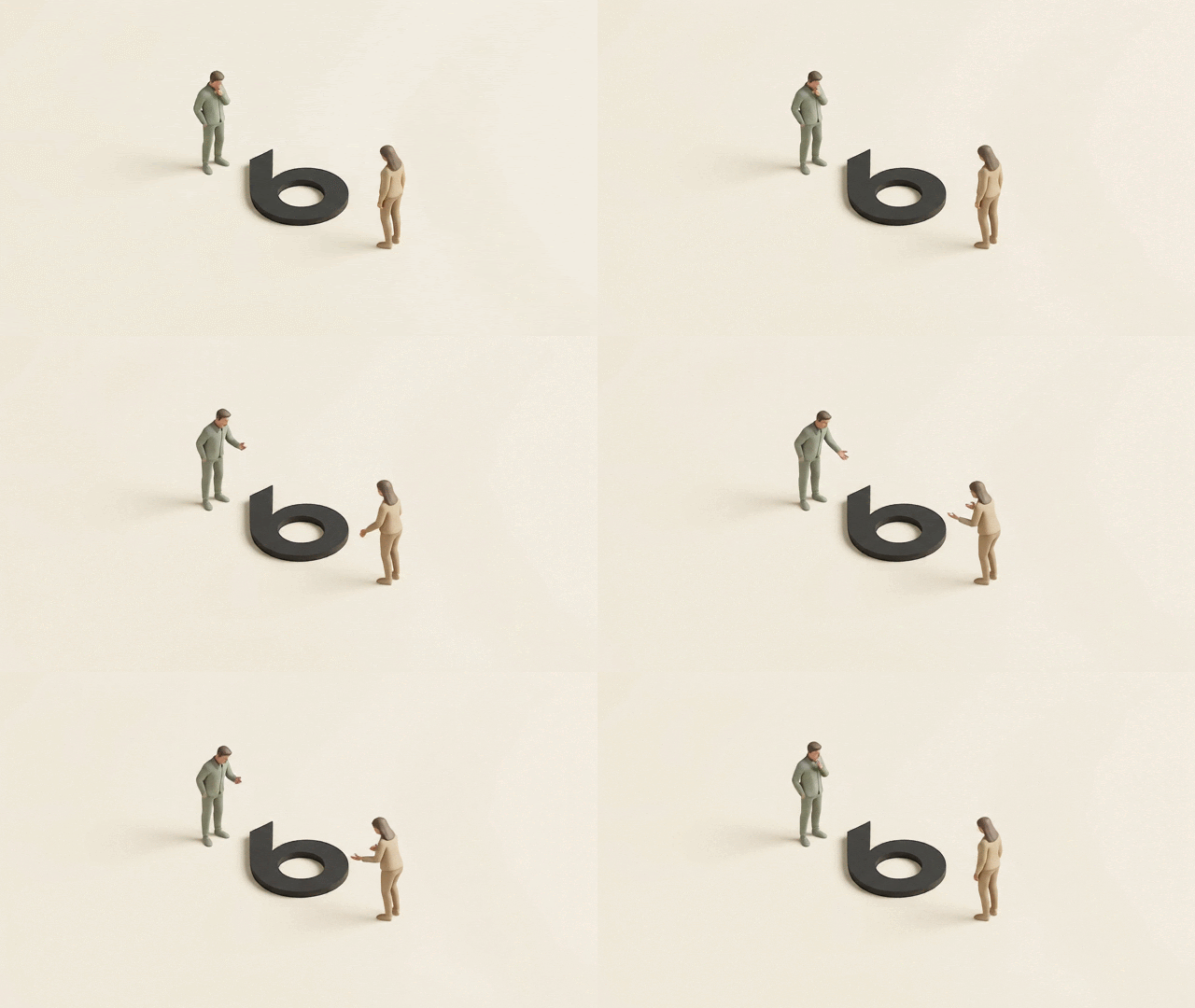
Some disagreements work like that. Others don’t, and it helps to know which kind you are in.
Questions with an answer
Imagine two developers looking at a button. One calls it red; the other calls it blue.
We can start with the usual suspects:
- the CSS that sets the color,
- the computed style the browser applies,
- the display that renders it.
If all of those match and the disagreement persists, we have to look from the other person’s side: how their screen is calibrated, what light they are sitting in, and how they perceive color. That is where we find out why they see it differently.
It may take some digging, but the question has an answer.
Questions without one
Now imagine a sealed box. Two people disagree about what is inside, but neither can open it or learn anything more about it.

There is no computed style to inspect. Each may have good reasons, and one of them may even be right, but neither can show it.
Some questions are sealed boxes. Would my life be better, or would I be healthier, if I had moved to another city ten years ago? The other life was never lived, so there is nothing to open.
It is also not one question. A move changes work, friends, money, sleep, and habits, and each of those changes the others. A better job might bring a longer commute, which costs time with friends, which affects health. The answer comes out of a whole system, and a yes or no throws most of it away.
Yes or no to AI
AI: yes or no? sounds like the button. It is closer to the move.
Software development is a system too: the people on the team, the codebase, the tests, the customers, the deadlines, and the cost of getting something wrong. Change how code gets written and the rest shifts with it. Reviews get faster or shallower, prototypes get cheaper, and security problems show up in new places.
A disposable prototype with no users and software that controls medical equipment are different systems. The same choice can be right for one and wrong for the other. Even one team can’t settle it by trying. If it ships quickly with agents and succeeds, it never sees the version where humans built it, and it can’t tell whether the success came from the process or from timing and luck.
For one team the answer might be yes, for another no, and for both it may change next year as the tools, the people, and the product change. What we have is the system we are standing in, and it is still moving.